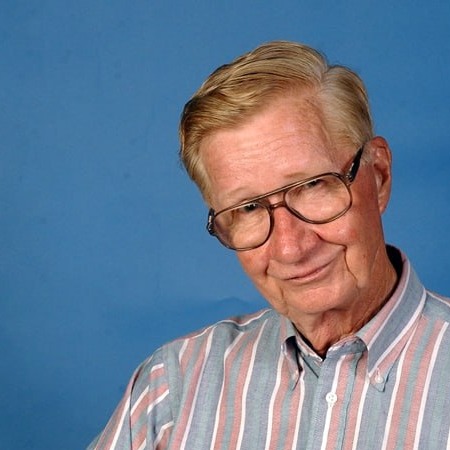
By Bob Hamm
John E. Chance & Associates, Inc.
Chance helps recover renowned downed space capsule
Error! Bookmark not defined. Business Editor LAFAYETTE - The rescue assignment for John Chance & Associates involved 38- year-old data.
The goal was to find the Liberty Bell 7 - the only spacecraft ever lost at sea by the United States.
The Liberty Bell's original mission went awry on a hot day July 21, 1961, when U.S. astronaut Gus Grissom nearly drowned after a 16-minute space flight. Upon landing, the Liberty Bell 7's hatch popped open unexpectedly.
Grissom had just splashed down off the shore of the Bahamas, and he barely escaped the space pod before it plummeted to the ocean floor for what would be its resting place the next 38 years.
Ironically, Grissom would perish behind a faulty door six years later in a fire during testing of the Apollo 1 spacecraft. Secured by the embrace of Atlantic Ocean, the Liberty Bell 7 fared much better.
For years the technology did not exist to recovery the Liberty Bell 7. But in the 1990s, technology improved to the point it became a feasible project. Chance & Associates became involved earlier this year when Houston- based Oceaneering Inc. sub-contracted for its world-class surveying expertise.
Recovery involved a two-fold project. The lost craft needed to be located on the ocean floor by Chance & Associates. Then it needed to be successfully raised. "It was an easy job, really," said Larry Prewitt, manager of Chance's marine operations. "The biggest challenge was getting accurate information on where to look for the Liberty Bell 7."
The key was Chance's proprietary graphic survey tool, Starfix.Nav, which was developed in 1986. The first satellite positioning system to operate 24 hours a day, Starfix.Nav has been improved repeatedly over the years by Chance to remain one of the most reliable systems in the world.
The search for the Liberty Bell 7 targeted 20 possible locations in a 24- square-mile area. Tides, winds and 38-year-old locator information were also used in the equation.
"We plotted all possible positions and laid them out based on the flight path," Prewitt said. "It was a fairly large area to search. We found it on the first try." The 9-by-13-foot vessel had sunk three miles below sea level, about 500 feet deeper than the Titanic's tomb.
The Liberty Bell 7 was located May 1 but it wasn't retrieved until July 20. Thousands of pounds of water poured from the spaceship as it was plucked from the Atlantic. Inside, seven Mercury dimes Grissom had hoped would bring him luck were found on the spacecraft floor as was the dud locator bomb that had failed to work.
The capsule is now undergoing what is expected to be a six-month overhaul at the Kansas Space and Cosmosphere Museum in Hutchison, Kan., where it will be stripped of rust, dismantled and re-assembled.
The next trip for Liberty Bell 7 will involve a public tour for the Discovery Channel, which sponsored the recovery. It will then be returned to Kansas for permanent display at the museum, which is paying the $225,000 in restoration costs.
Chance, which was contracted by Houston-based Oceaneering for its positioning excellence, has been buoyed by the high-profile work, Prewitt said.
"It's actually quite a neat project for everybody in this company," Prewitt said. "It's typical of what we do in search jobs but it's much more historical."
Prewitt said raising the Liberty Bell 7 has been the high point of a difficult year for Chance, which saw business slow as most oil and gas companies did during the 18-month downturn that began in November 1997.
"We've slowed down from last year, there's no doubt about that," Prewitt said. "But we've managed to keep busy."
The horizon holds promise, Prewitt said, of much more work to come.
"It looks like it's starting to turn around," he said. "The fourth quarter is usually one of the big periods."
The Liberty-raising spotlights the incredible technological feats Acadiana companies are capable of achieving. Prewitt said he could have found one of Grissom's dimes on the ocean floor if needed.
"It's probably do-able," the 25-year Chance veteran said. "It just depends on how much time, money and effort you want to put into it."
To the layman, the capabilities of John E. Chance & Associates, Inc. (JECA) are almost beyond comprehension. combining the knowledge, experience and skill of almost 400 employees with incredibly advanced technology, the Lafayette-based company performs tasks in the intricate world of surveying, positioning and navigation that, to the average person, are nothing short of miraculous. • A pipeline construction company needs to know what lies along the bottom at a precise point in the deep waters of the Gulf. JECA, using an advanced computer system, calls up the information from a data base that is, collectively, the best existing repository of information on the floor of the Gulf -- compiled over 37 years, and constantly updated. • An operator needs coordinates for moving a rig in deep water, location of subsurface hazards, and precise guidance for placement on-site. JECA delivers the information with astounding accuracy. • The Corps of Engineers needs current data on the changing terrain of the Florida Inlets. JECA provides it by flying the area with a helicopter- mounted hydrographic surveying system called SHOALS, using laser technology to acquire data 10 times faster than shipboard echo sounders. • A municipality wants to reduce the time and cost of inventorying public works assets. TruckMap, a JECA system using an instrumented vehicle, identifies utility poles, traffic signals, drainage entrances and other components of the infrastructure, maps their position and elevation and even provides digital video images of the items.
This is a sampling of the capabilities of this company with worldwide operations, which has made Lafayette its home since its inception in 1957. The JECA story is one of industry leadership in offshore positioning and navigation, geophysical surveying and seabed mapping, geodetic and land surveying and environmental consulting. Beginning with innovative service to petroleum companies in the Gulf of Mexico, JECA grew rapidly to its present status of one of the most trusted and innovative survey service providers in the world.
An indication of the extensive recognition of its experience, performance and technology was JECA’s selection as primary geodetic surveyor for the engineering and construction phase of the Superconducting Super Collider. The company was given responsibility for precise positioning of 54 miles of underground tunnels, and 20 miles of injector rings. Before discontinuance of the project, JECA positioned tunnels to an accuracy of one part in two million.
Unique positioning capability is the foundation for most of JECA’s advances. JECA implemented the world's first 24-hour commercial satellite- based positioning system in 1986. This system, by itself or used with the federal government’s Global Positioning System (GPS), was capable in determining specific locations anywhere in North America. While GPS technology was developed by the Department of Defense for military purposes, it is used by airlines and public transportation industries, utility and road repair crews, emergency response crews, and for a variety of shipping and transportation needs. GPS is invaluable to land surveyors and mappers, natural resource managers, field data collectors, and anyone who needs to pinpoint a specific location or navigate to another location.
With all its capabilities, however, GPS does not provide the pinpoint accuracy traditional with JECA. U.S. Department of Defense concerns about national security require that GPS data be transmitted with continuous random variations. Since 1987, JECA has overcome this limitation.
“Applying our experience and technology,” says Philip Stutes, president, “we've met the need for enhanced GPS accuracy with OMNISTAR™, the most accurate and reliable positioning system available.”
OMNISTAR™, a proprietary satellite-based Differential Global Positioning System (DGPS), uses a network of differential reference stations, precisely positioned at permanent locations throughout North America. GPS receivers are placed at these stations, and the difference between these known, fixed locations and the GPS derived location, determines the errors in the GPS position. Clients using OMNISTAR™ are given the correction values for their locations, with errors due to distance eliminated, enabling the achievement of real-time, sub-meter positioning accuracy.
Only JECA’s OMNISTAR™ offers the accuracy of DGPS, with nationwide coverage and immediate-use convenience. Clients have no need to establish base stations or obtain radio frequency licenses. They connect the lightweight, portable OMNISTAR™ receiver to a differential GPS receiver, and make the error corrections.
providing precision geophysical surveys of seabed and subsea locations is still the major business function of JECA, which specializes in detailed, high resolution hazard surveys for companies exploring for energy offshore. JECA is the leading provider of positioning services for marine seismic fleets, and positions more offshore rigs and barges in the Gulf of Mexico than any other survey company. It is also a leader in as- built pipeline surveys.
While JECA’s technological advances enhance JECA’s performance in offshore applications, new developments like OMNISTAR™ play a role in the strategy for the future: expansion to more land-based applications.
The positioning accuracy of OMNISTAR™ opened many opportunities. This cost-effective technology is used by municipalities, government agencies, for Geographic Information system (GIS) Data Collection, and in agriculture. On large farms, workers measure the amount of grain from various areas and determine from OMNISTAR™ positioning the exact areas producing good harvests and those producing weaker ones. with a yield monitor map, Agriculturists can then do soil tests on the low producing areas. Agricultural chemicals can be applied on the basis of need, rather than applying the same amount overall.
OMNISTAR™ can tell the pilot of a crop dusting plane exactly where to release specific amounts of chemicals. This has environmental advantages, since tighter control of chemicals results in less runoff and pollution.
JECA’s innovative system is a key component in the application mentioned earlier whereby a municipality’s infrastructure components can be inventoried and mapped from an instrumented vehicle, with astounding productivity gains over traditional methods. TruckMap, a mobile mapping and inventory data acquisition system developed by JECA, combines real-time positioning with high-resolution imaging to identify, position and record data in the field.
Using a reflectorless laser range-finder, pointed with a bore-sighted video camera, a precise horizontal and vertical angle and slope distance is measured to any target. The vehicle attitude, heading and position are also measured, enabling the absolute position of the target to be determined and recorded.
Since all features are geographically referenced, they can be directly exported to any GIS system. A digital video image is also recorded, and user-defined attributes can be associated with all collected features. The entire system is designed for installation on a van or small truck.
Real-time positioning, with an accuracy better than one meter, is provided through OMNISTAR™.
“The possible uses for TruckMap are virtually endless,” Stutes says. “The Federal Emergency Management Agency (FEMA) has proposed to use it to survey elevation of homes built before the passage of Flood Plain legislation, to determine which ones should be candidates for flood insurance.
“The City of Dallas is planning a TruckMap pilot project to inventory municipal assets. It is highly effective in highway attribute inventory, utility inventory, railway attribute inventory and emergency relief mapping.”
JECA’s FLI-MAP System, to be introduced this year, is the latest in airborne survey technology and promises to revolutionize route survey practices. At 40 mph, it will typically scan a 100 meter swath, mapping topographical information, obstructions, and everything else in the corridor. Precise GPS, Laser Rangefinder, and Digital Imagery data can then be post processed, producing an accurate digital terrain model of the area surveyed.
Its applications will include highway survey work, rail surveys and periodic pipeline surveys to determine if there have been changes, such as home or road construction, on a pipeline route.
FLI-MAP collects remarkably accurate Digital Data at the rate of 18 million data points per hour.
“the backbone of the company is experienced, capable, dedicated people,” Stutes says. “Many have been with the company for over a quarter- century. Our combined experience runs into thousands of years.”
That experience and ability, according to Stutes, has also been a key factor in the many honors received. They include the U.S. Senate Innovation Award, and Shell Oil Company’s Safest Contractor Award, presented to JECA every year since it was created.
“We feel fortunate that the company headquarters is in Lafayette,” Stutes says. “This is a special place, giving us exceptional local employees, and providing an appealing new home for people who come to work for us from other places.
“Being a good corporate citizens is a responsibility we take very seriously. We try to give back to Lafayette some of the benefits it has given us.”
Stutes says 1995, with expansion into more land-based projects, promises to be one of the most exciting years in the company’s history. “Our company has always functioned best when pushing toward new frontiers,” he says. “We are ready now for a new chapter in the history of JECA.”
DROP QUOTE:
“Beginning with innovative service to petroleum companies in the Gulf of Mexico, JECA grew rapidly to its present status of one of the most trusted and innovative survey service providers in the world.”
SIDEBAR:
THE COMPANY: John E. Chance & Associates, Inc. (JECA)
THE PLACE: Headquarters in Lafayette; operations world-wide
THE SERVICE: High tech services in support of offshore and onshore surveying, positioning and navigation
THE PROMISE: Industry leadership, and good corporate citizenship